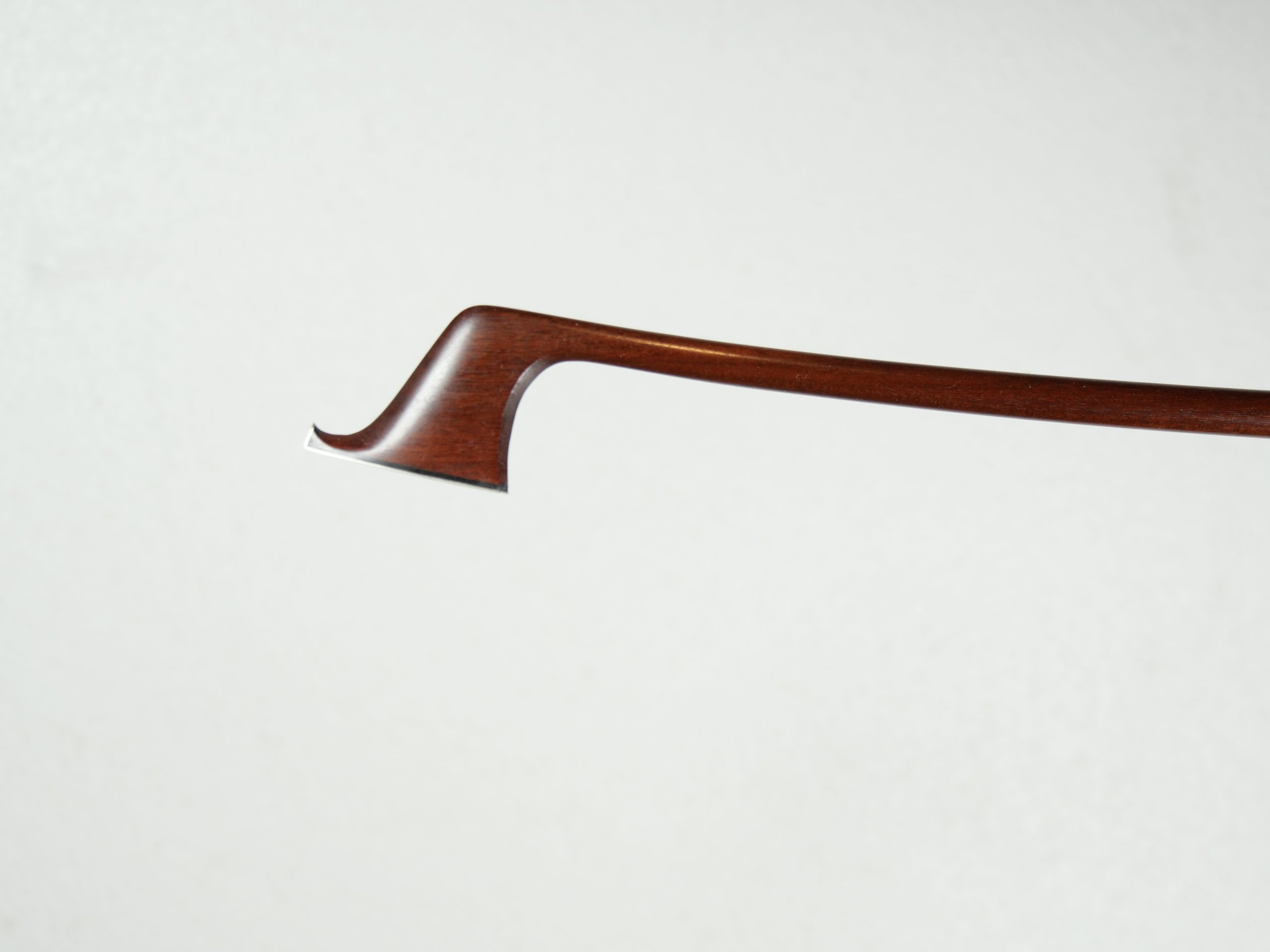
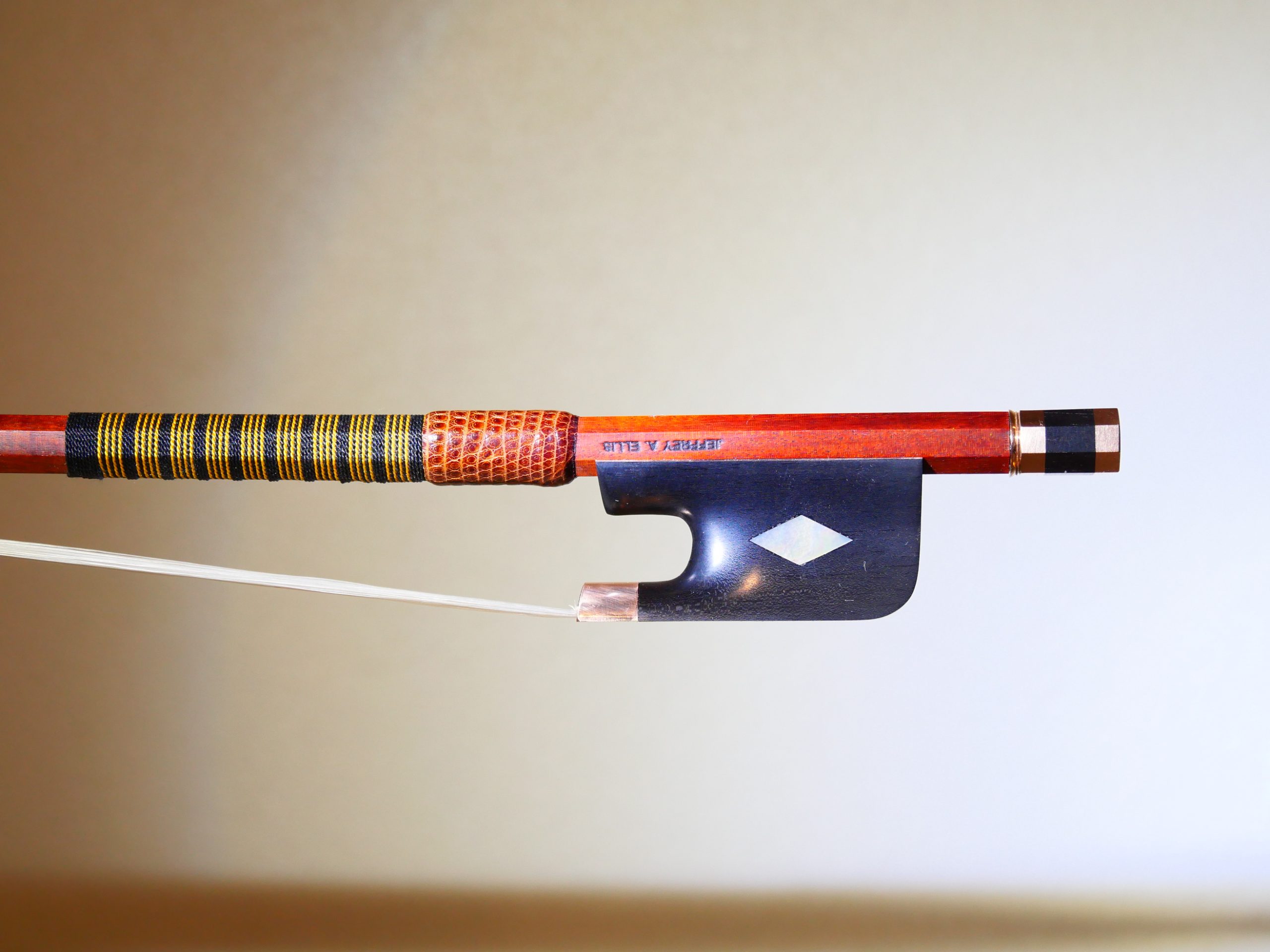
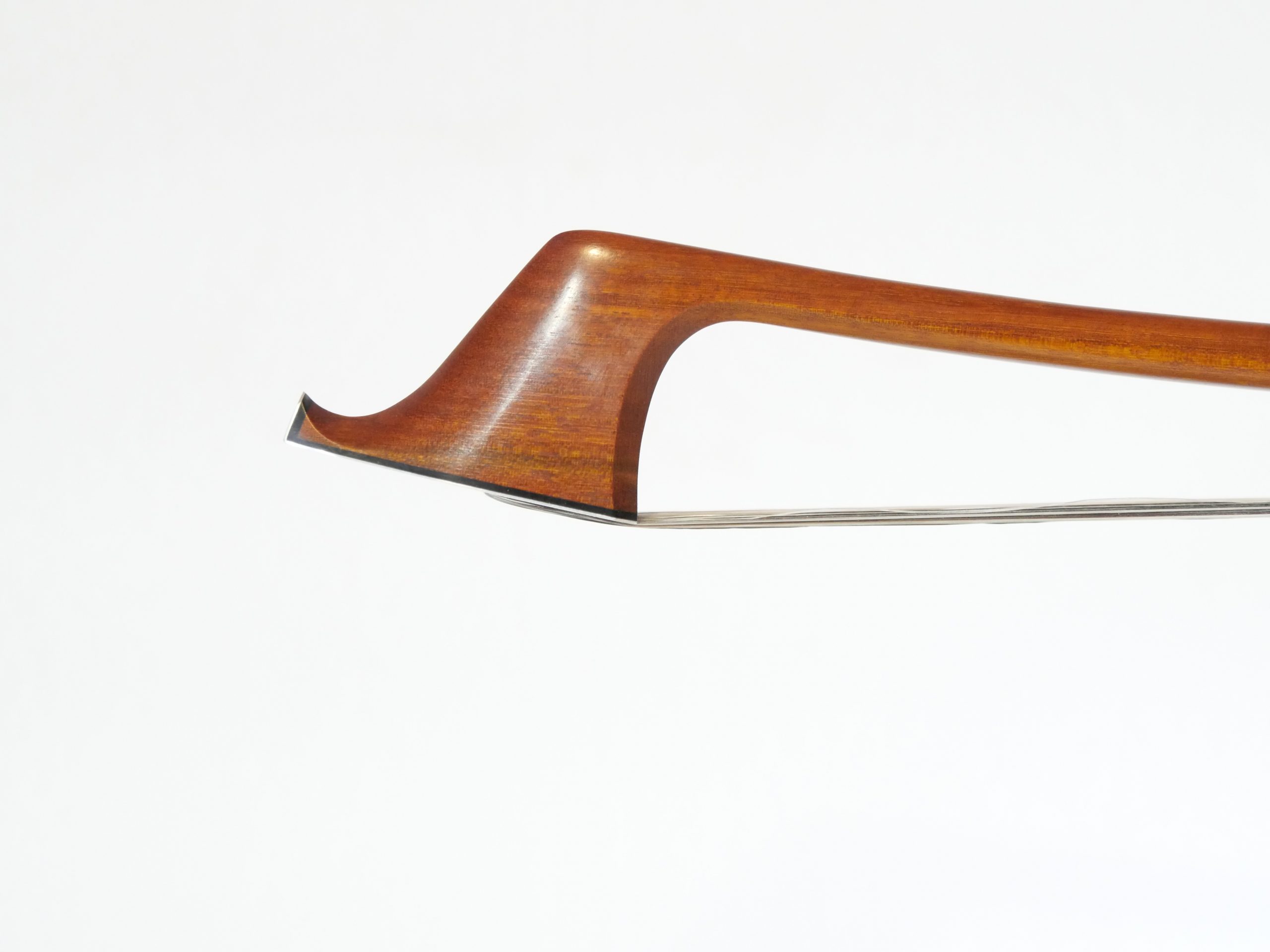
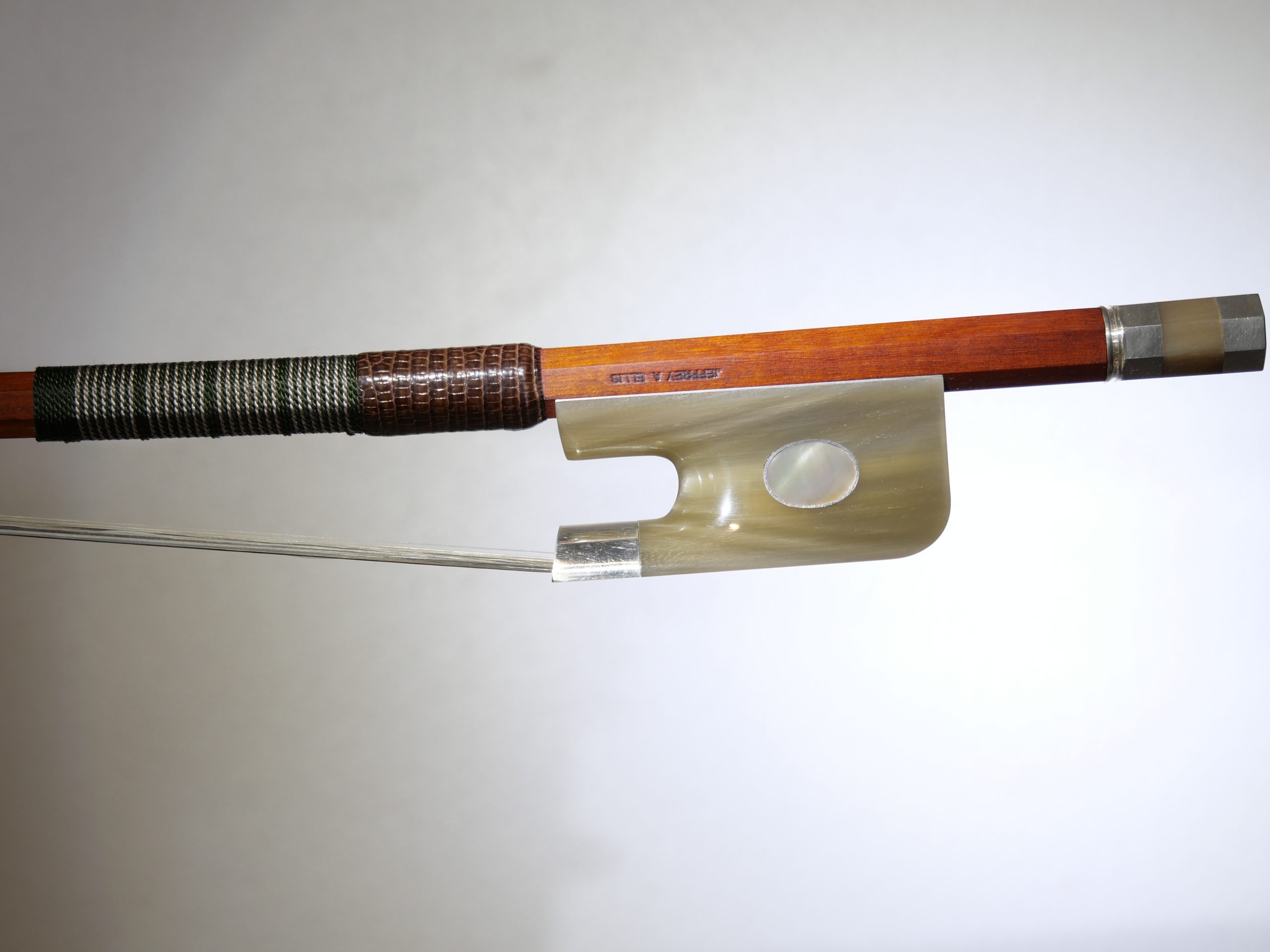
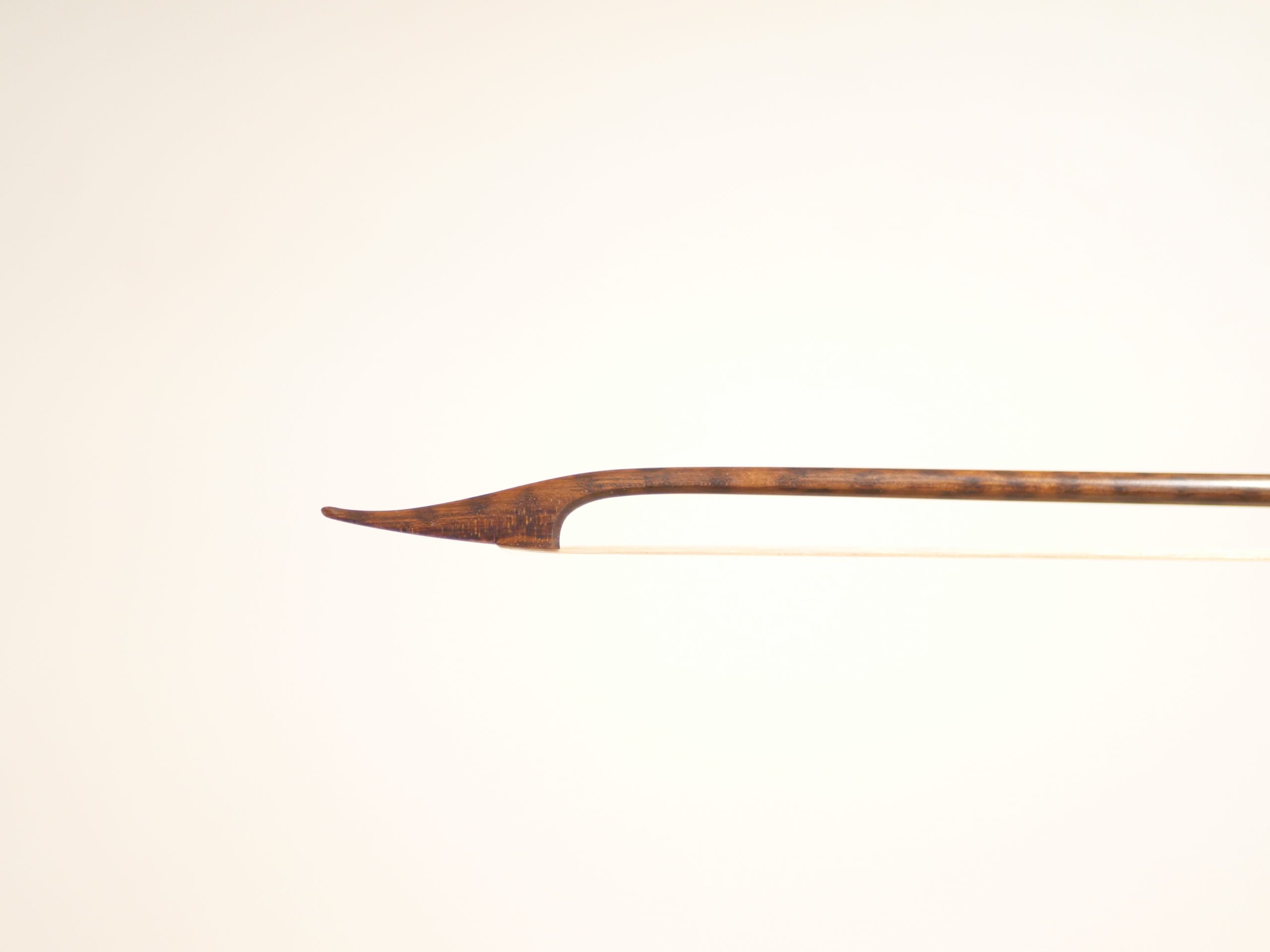
"I have a Peter Guarneri Violin and a bow by Australian maker Jeffrey Ellis which is equal to some of the finest bow makers working now."
— Donald Hazelwood, Order of the British Empire (OBE) and Officer of the Order of Australia (AO) recipient,
former long serving concertmaster of the Sydney Symphony Orchestra.
"Sydney's Jeffrey Ellis is one of Australia's most notable bow makers.
He was a Churchill Fellow and studied with William Salchow in New York in 1989.
Since 1988 Jeffrey Ellis has been awarded 5 certificates of merit from the Violin Society of America and in 1993 he was awarded a silver medal at the Mittenwald Violin and Bow making Competition."
— The Strad Magazine, August 1993.
Article by Michael Atherton, author of Australian Made, Australian Played and
Foundation Professor of Music, Associate Dean (Research), and founding Head of the former School of Contemporary Arts,
University of Western Sydney
Three bow typess are in use today, these are baroque, transitional and modern.
The baroque bow, commonly referred to as the Corelli (1653-1713) and also the Tartini (1692-1770), is so named after the two violinists who probably influenced the style. It can be as basic as a plain round stick with a non-adjustable clip-in frog, in which case the hair tension is applied with the thumb or a finger. Other methods of hair tensioning are a dentated or crémaillère mechanism or the threaded metal shaft and brass eyelet device used on all modern style bows.
The sticks of baroque or dance bows are almost always made without a camber (term used for the concave arch in the stick, as in the modern bow) usually resulting in a convex or over bent stick under tension. Free hair length will be around 580mm, this will vary more than the standardized length of modern bows (the modern bow has a free hair length of 645-650mm).
Weights for violin bows will be approximately 51-53grms while the weight for 'cello bows will be around 70-80grms with a free hair length of 580-620mm. Styling for these bows can be quite elaborate, sticks are sometimes made with up to 8 or 16 flutes.
Fluting is the term used for shallow grooves cut along the length of the stick. Normal practice was to make the stick octagonal in section, with some bows being made round in section.
Development of this bow peaked around 1730-50 and considering that wood from the new world was available at this time, some of these bows would have been made from either snake wood, ironwood, china wood or pernambuco (brazilwood). Frogs are made of either wood, ivory or bone.
In the 1780s, the Italian violinist and composer Viotti (1755-1824) lived in Paris and was a friend of the Tourte family, this connection resulted in the further development of the transitional bow and its evolution to the modern bow. At this stage there is the development of the ferrule (small and narrow) and the upright hatchet style head.
Francois Xavier Tourte was born in Paris in 1750 and died in Paris in 1835 and is considered to be the major influence of the development of the early modern bow.
John Dodd in collaboration with Wilhelm Cramer was on a similar track in London.
This type of bow is now more like the modern bow, being heavier, up to 58 grms, with a well defined camber (although still not the complete modern camber) and made from the same hardwoods, but still retaining some of the characteristics of the transitional bow.
To counteract a longer and heavier stick, the modern bow needed a heavier frog and this required the addition of more metal, usually in the form of silver or gold.
Very little is known of the makers of the early baroque period, bow types were generally designated according to the players who used them i.e. The Cramer, Corelli, Tartini or Viotti.
The Tourte family with Viotti, and primarily Francois Tourte were responsible for the development of the early modern bow, while John Dodd in London produced similar bows.
With the arrival of bow makers such as Peccatte, bows, while looking similar to those of Francois Tourte are heavier and stronger but do continue to retain the same camber shape.
Voirin (1833-1885) takes the next step and increases the camber of the stick, in particular, behind the head.
Sartory (1871-1946) later produces a more robust version of this style of bow.
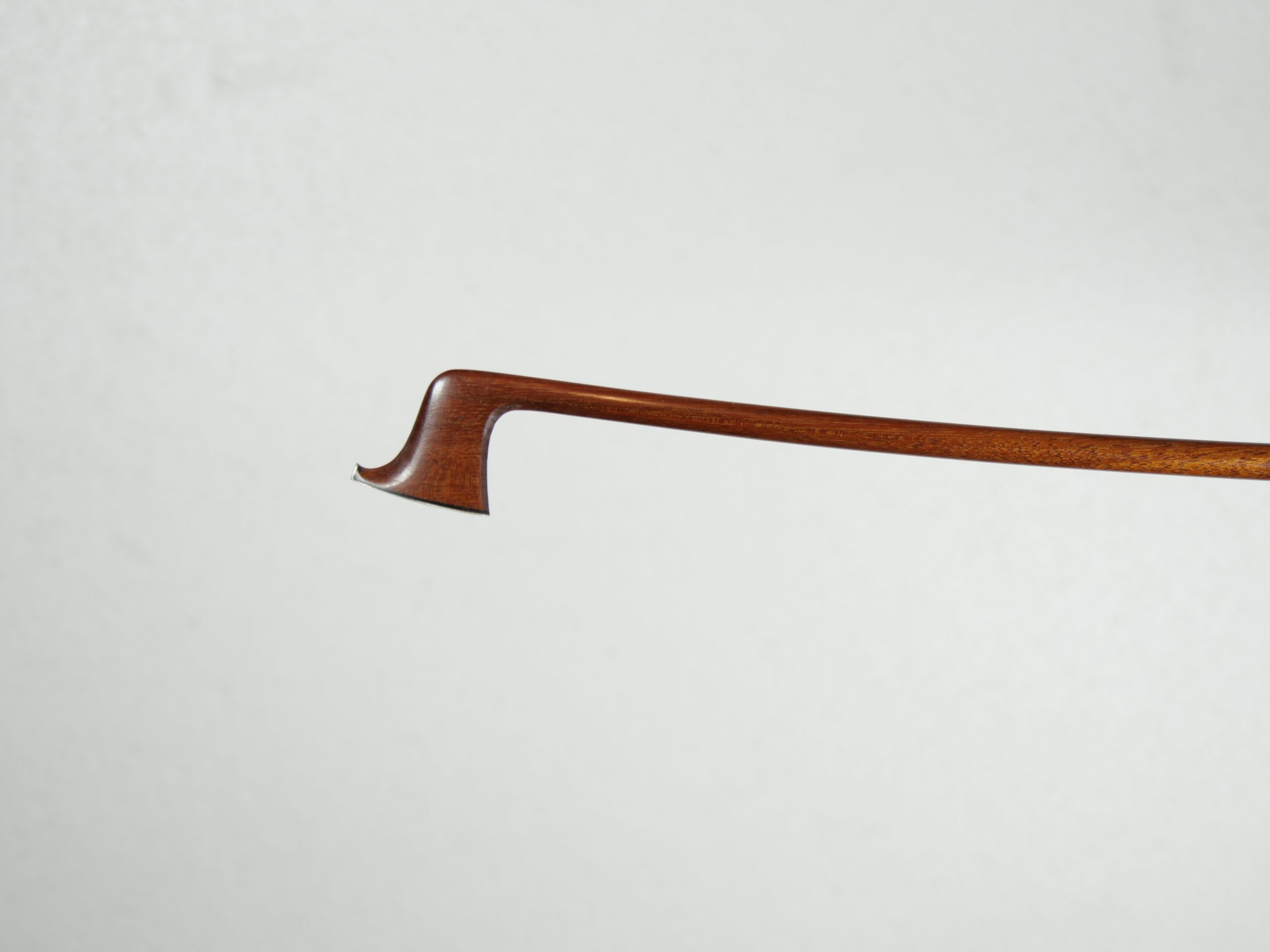
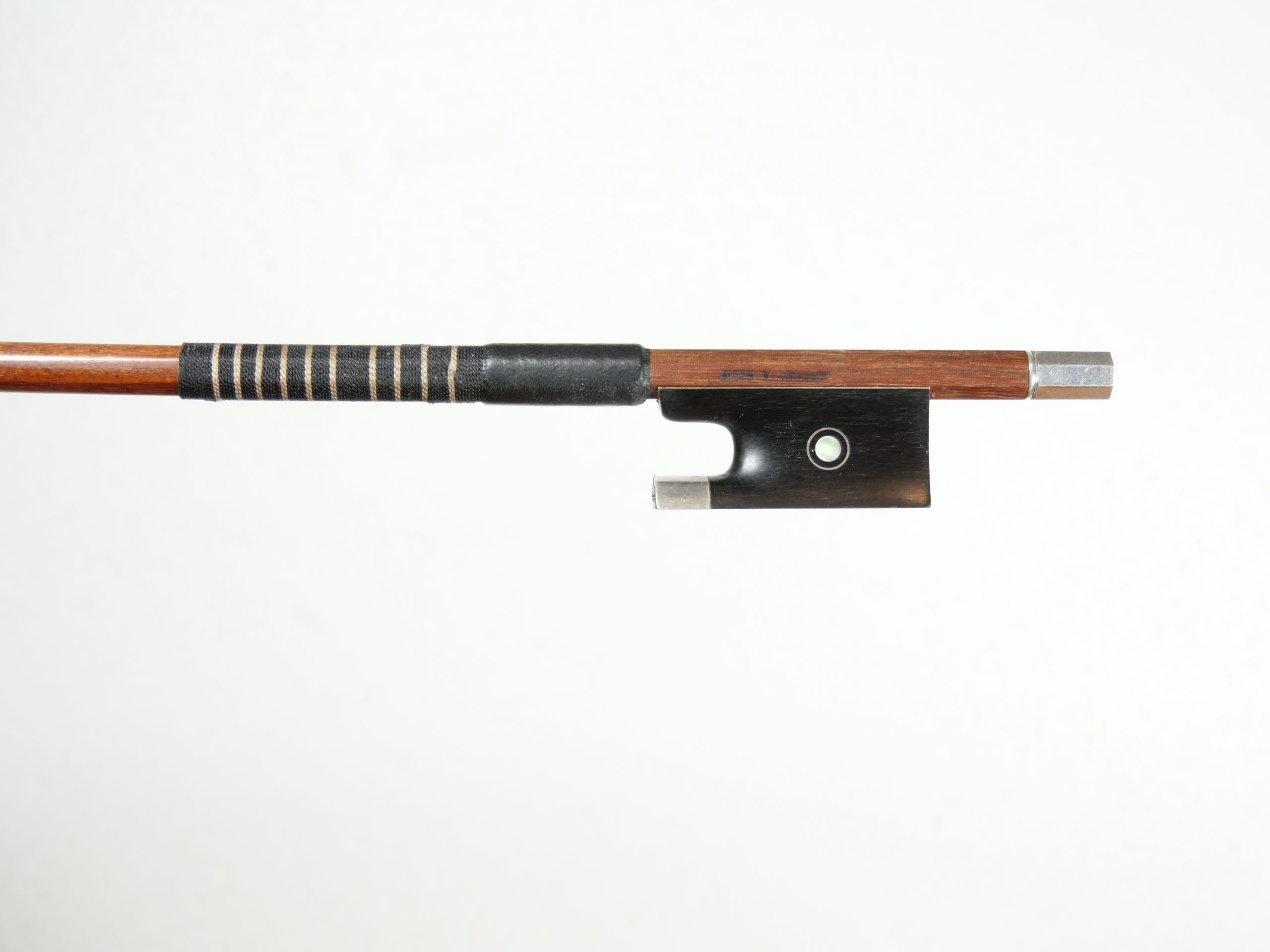
What determines the price of bows?
Here I will only be considering handmade bows, which are bows that are completely made by one person who makes both stick and frog from their primary materials.
A bow maker with a possible working life of no more than 40 years and working alone, producing about 40 bows per year will produce in a lifetime something like 1600 bows. Of these, about 30% may be considered very good bows and if the bow maker is very fortunate, 10% of these may be thought of as great bows.
The bows of Francois Tourte for example are very expensive. There are two main reasons for this, rarity and quality.
Looking to auction prices for guidance is useful, if the prospective buyer is considering all the determining factors.
When discussing prices it is useful to make comparisons.
It would be possible to make many thousands of carbon fibre bows each year if the demand existed or the market could cope.
In the last 20 or so years, the prices for good handmade and above average bows have been increasing by up to 10% per year. This increase in price is due to the difficulty of reproducing something that has been made by hand, one by one.
Carbon fibre bows on the other hand are easily reproduced, with the major component made in a mold, the same process used to manufacture all plastic goods.
When these factors are considered, I believe that this type of bow is over priced and as they are easily reproduced, carbon fibre bows will not increase in value.
It is true to say that carbon fibre bows are much less prone to breakage, but in the event of loss or theft, insurance will always be necessary.
Many players choose a bow on the basis of the name or of what feels most comfortable. Selecting on the basis of name may seem reasonable if the name on the bow is genuine and its price is reflected by the condition overall, including the authenticity of the frog and its components.
If a bow by a major maker sells for some fantastic price at auction there are factors that have determined that price. These are authenticity, condition, and a factor many overlook, history. Who has owned the bow?
Comfort for many players can be a critical and deciding factor when buying a bow, unfortunately this eliminates many bows with potentially dynamic qualities.
Too much choice can also result in confusion and indecision.
There have been great and poor bows made in every period.

| Product/Description | Cost |
| Regular | |
| Modern Silver and Ebony Mounted Bows
Price is determined mainly by the inherent quality of the stick. |
$6,000.00 |
| Bows from | $1,000.00 |
| Double Bass Bows | $4,000.00 |
| Gold and Ebony Mounted Bows | P.O.A |
| Pre-Modern, i.e. Baroque and Transitional | |
| Unfigured Snakewood or Banya | $1,500.00 |
| Figured Snakewood | $2,500.00 |
| Please note:
|
|

| Description | Cost | |
| Rehair | Violin, Viola or 'Cello | $70 |
| Double Bass | $85 | |
| Other instruments | Quotation | |
| Shorten Hair | $30 | |
| New Eyelet | Minimum | $35 |
| Bush Eyelet | $120 | |
| New Screw | Minimum | $50 |
| Bush Screw | $130 | |
| Pin | Silver | $20 |
| Gold | $35 | |
| Cheval | $650 | |
| 1/2 Cheval | $400 | |
| Frog Liner | Silver | $250 |
| Gold | $350 | |
| Heel Plate | Round, Silver (Gold+$150) | $350 |
| Square, Silver (Gold+$150) | $250 | |
| New Ferrule | Silver | $300 |
| Gold | $450 | |
| Tongue In Frog | Ebony | $450 |
| Tortoise | $650 | |
| Leather | Thumb | $25 |
| Full | $45 | |
| Protector | $25 | |
| Collar | $10 | |
| Head Facings | Ivory | $300 |
| Ivory for Bass | $350 | |
| Silver | $300 | |
| Silver for Bass | $330 | |
| Gold | $480 | |
| Tip | $35 | |
| Windings | Silver | $80 |
| Gold (18ct) | $350 | |
| Metallic | $80 | |
| Whalebone | $60 | |
| Two-colour silk | $50 | |
| Multi-colour silk | $120 | |
| Marine Shell | Eye | $60 |
| Slide (min. $60) | $140 | |
| Repairs To Stick | Bush end with new nipple | $300 |
| Bush inside bore | $200 | |
| Fill in stick at thumb | $45 | |
| Inlay wood at thumb | $90 | |
| Butt or Head graft | $700 | |
| Head repair | $300 | |
| Thread wrap for break | $30 | |
| Staighten (minimum) | $120 | |
| Recamber | $180 | |
'Cello Bows
|
Double Bass Bows |
Viola Bows |
Violin Bows
|
Jeffrey A. Ellis is based in Sydney, Australia and frequently works for international clients in need of high quality handmade bows, bow repair and bow restoration services.
Sydney, Australia
Tel: +61 (2) 9498 7290
Domestic: 02 9498 7290
Email:
Please get in touch if you require assistance with the following instruments, their bows, or repairs/restoration work. Jeffrey A. Ellis is based in Sydney, Australia and frequently undertakes work for international clients.
Disclaimer: please note that the presence of a link below does not signify endorsement by Jeffrey A. Ellis, Bowmaker.
Links are provided for information purposes only.